Largest wine producer in the world
Acres of vines planted across the country
Average days the sun shines
Cases of Malbec shipped worldwide in 2013















About Argentine Wine
Elevation
- Vineyard elevations range from 2,300 to as high as 9,000 feet.
- Intense sunshine (solar radiation) with relatively cool air temperatures produces healthy vines, which allows for selective pruning and good yield management.
- High polyphenol levels result in soft tannin structure and greater flavor intensity.
Climate
- High desert with warm summer days and cool nights leads to even ripening and soft tannins without losing the acidity necessary to achieve balanced wines.
- 8 inches of rain per year means growers can control vine stress and yields.
- 300 days of sun + cool air temperatures means grapes achieve excellent physiological ripeness at the same time that sugars are still in balance.
Soils
- Virtually pest-free vineyards due to low humidity and high altitudes.
- Growing areas vary from sandy to clay, but are predominantly loamy with excellent drainage.
- Most soils are low in organic materials due to elevation and climate, creating additional desirable vine stress.
Varietals Planted
*Denotes varieties imported by Vine Connections-
Malbec*33%
-
Bonarda*23%
-
Syrah*14%
-
Cabernet Sauvignon*12%
-
Tempranillo7%
-
Merlot5%
-
Pinot Noir*2%
-
Other4%
-
Torrontes*14%
-
Chardonnay*12%
-
Sauvignon Blanc7%
-
Riesling5%
The Wine Regions
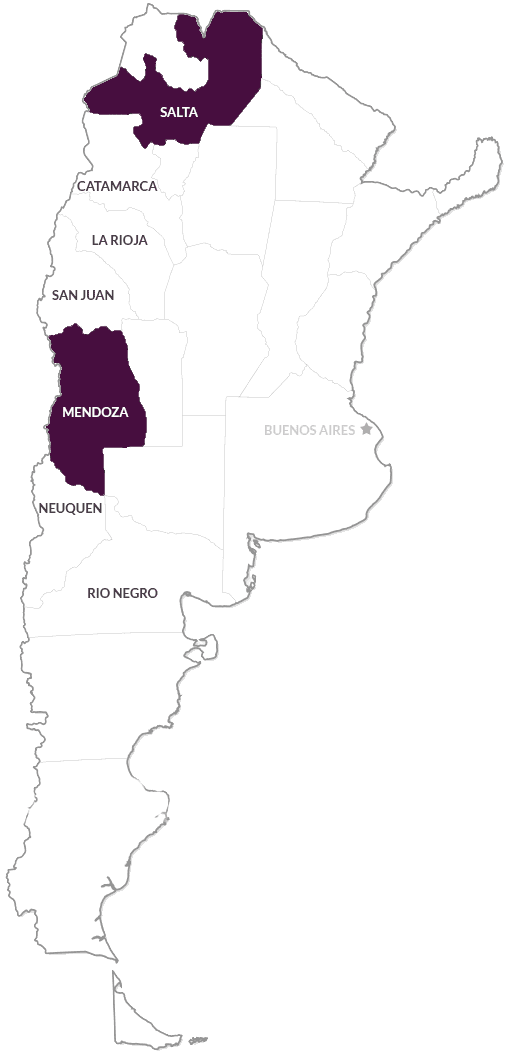
Salta
Tucked away in the northeast corner of Argentina, Salta claims the world's highest elevation vineyards that soar up to over 10,000 feet. The rocky terroir, high desert climate, and high day-to-night temperature fluctuations create an ideal environment for the Torrontes grape. The center of all wine production is in Cafayate, a 4-hour round-trip from the city of Salta, with over two dozen wineries.
Catamarca
Bordering Chile, Catamarca is defined by high plateaus and fertile valleys and boasts around 7,500 acres of vineyards. With both stony and sandy soils, the stand out varietals in this region are Syrah, Cabernet Sauvignon, Malbec, Bonarda, and Torrontes.
La Rioja
Vines have been planted here since 1591, making it the oldest wine-producing region in Argentina. Winemakers are rewarded with very little rain, high temperatures and low humidity in La Rioja.
San Juan
San Juan is Argentina's second largest growing region with approximately 125,000 acres planted. The region consists of a set of valleys with very hot and dry climates.
Mendoza
With over 1,000 wineries, Mendoza produces roughly 80% of all Argentina's wine. Vineyard altitudes range from 2,000-5,000 feet above sea level. At these high elevations, the air temperature stays relatively cool, yet the vines receive significantly higher amounts of solar radiation than vines at sea level. Grapes here have the longest "hang-time" in the world, which creates balanced wines with ripe fruit flavors and smooth tannins.
Neuquen
The first vineyards in this relatively new region were planted in 1999. In Neuquén, the Andes begin to fade away and the vineyards only peak around 900 feel above sea level. Here it's all about latitude, not altitude. By pushing the southern boundary of its vineyards as far as the 42nd parallel, this Patagonian province makes wines in a cool-climate tradition.
Rio Negro
Situated in the vast, arid, and wild Patagonian plateau, Rio Negro boasts a dry climate with little rain. Summers are characterized by warm days and very cool nights. With lower vineyard elevations, many Rio Negro wines are typical cooler climate varietals like Pinot Noir and Chardonnay.